
Interpersonal Closness with ChatGPT
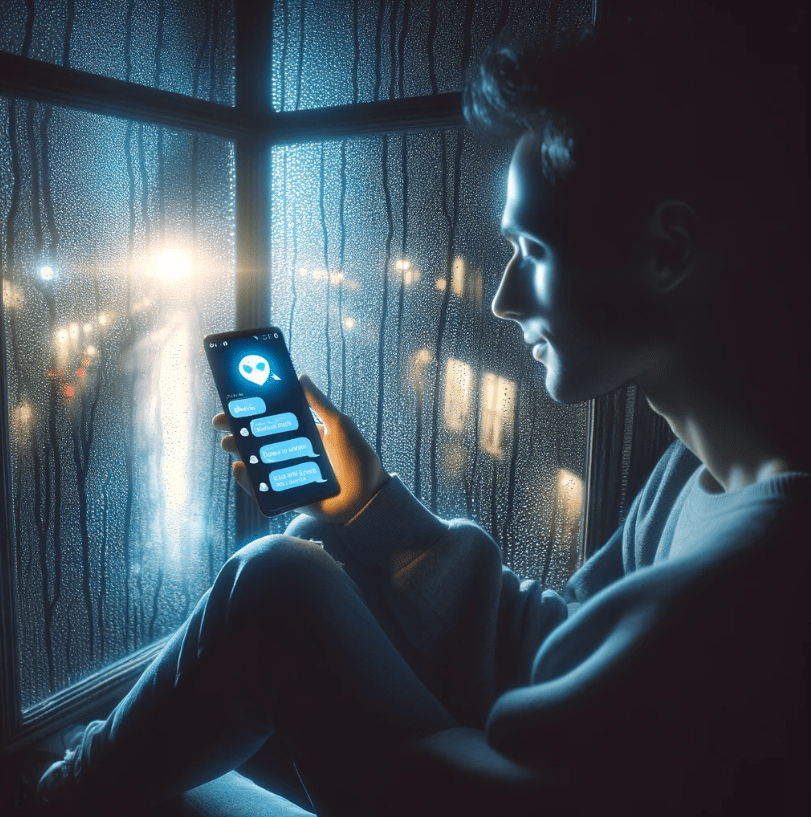
Large language models (LLMs) are becoming increasingly advanced, creating artificial agents capable of developing complex intimate relationships with humans. The project examines whether humans can develop intimacy (i.e., interpersonal closeness and interest in intimate interactions) with partners that are perceived as either human or artificial, and whether the perceived ontological nature of the agents influences said intimacy across genders (i.e., women vs men) and cultures (i.e., German vs Canadian).
This project is a collaboration with Simon Dubé (Research Fellow at the Kinsey Institute, Indiana University, USA).

Visual Attention Towards Computergenerated Sexually Explicit Material
In a comprehensive eye-tracking study, researchers are experimentally investigating how people respond to various types of sexually explicit material—both computer-generated and human—distinguishing between painful and neutral content. The study aims to determine whether different modes of reception are employed or if the visual processing of computer-generated sexual material mirrors that of human material.
This project is a collaboration with Prof. Dr. Tilo Hartmann (VU Amsterdam, Netherlands) and Prof. Dr. Johannes Fuß (University Duisburg-Essen, Germany).
The Role of romantic and sexual fantasy in the parasocial relationship building with chatbots

Recent progress in text-generative AI has resulted in the creation of companion chatbots, with the ability to partake in meaningful, romantic, and sexual interactions with their users. Despite the growing number of chatbot users, the underlying factors that facilitate relationship-building with these chatbots remain largely unexplored. This project aims to investigate the role of the users´ romantic and sexual fantasies in the development and maintenance of such user-chatbot bonds.

The usage of Sex Tech for Vulnerable User Groups and the Third Person Effect
The aim of the study is to deepen the discourse surrounding the perceived benefits of sexualized technologies, such as erotic chatbots, app-controlled vibrators, or sexualized robots, for vulnerable user groups, notably neurodivergent individuals and people with disabilities. Of particular interest is the discrepancy in perception that these technologies are primarily suited for “others,” a phenomenon referred to as the “third-person effect.” This primarily pertains to the viewpoints of individuals who may lack personal familiarity with the subject, particularly those without disabilities. The objective is to underscore the necessity for more expert discussions and the active engagement of affected groups in the research process.
 INTITEC